
Written by Neil McDonald
Click to navigate directly to each section.
- How Transportation Affects Our Climate Goals
- What Can Local Governments in Waterloo Region Do?
- Sustainable Transportation is Good For Our Health
- Frequently Asked Questions
How Transportation Affects Our Climate Goals
In Waterloo Region, transportation is the largest source of greenhouse gas emissions (GHG), contributing over 47% of our total carbon pollution. Most of this comes from fossil fuel-powered cars, trucks, and commercial vehicles.
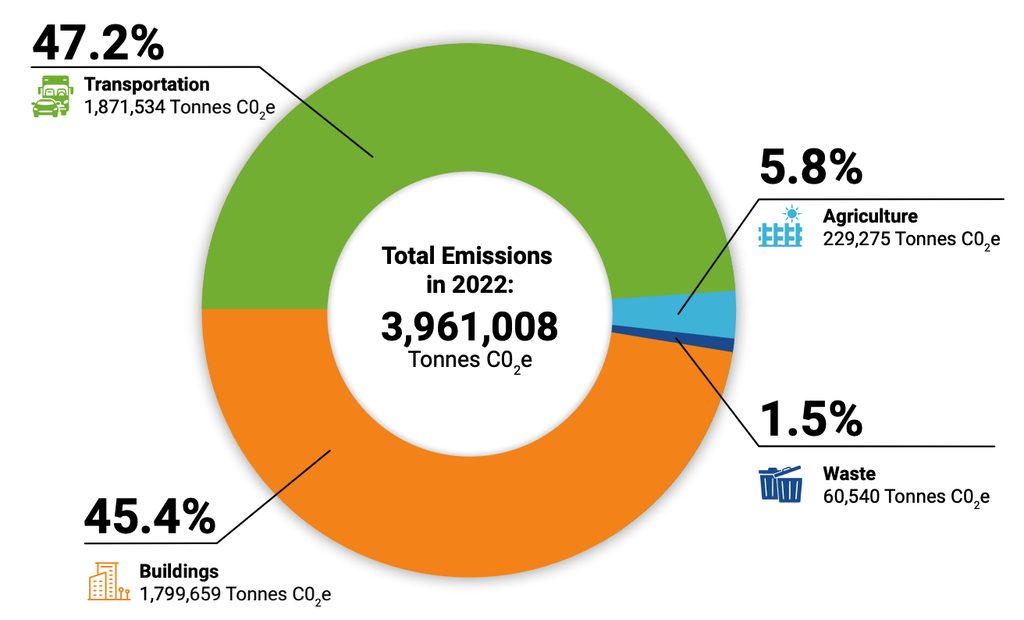
To reduce our overall emissions, all eight local municipal and regional councils approved the TransformWR climate action strategy to reduce GHG by 80% (from 2010 levels) by 2050, known as “80by50.” In 2021, all municipalities also approved a short-term target to cut emissions in half by 2030.
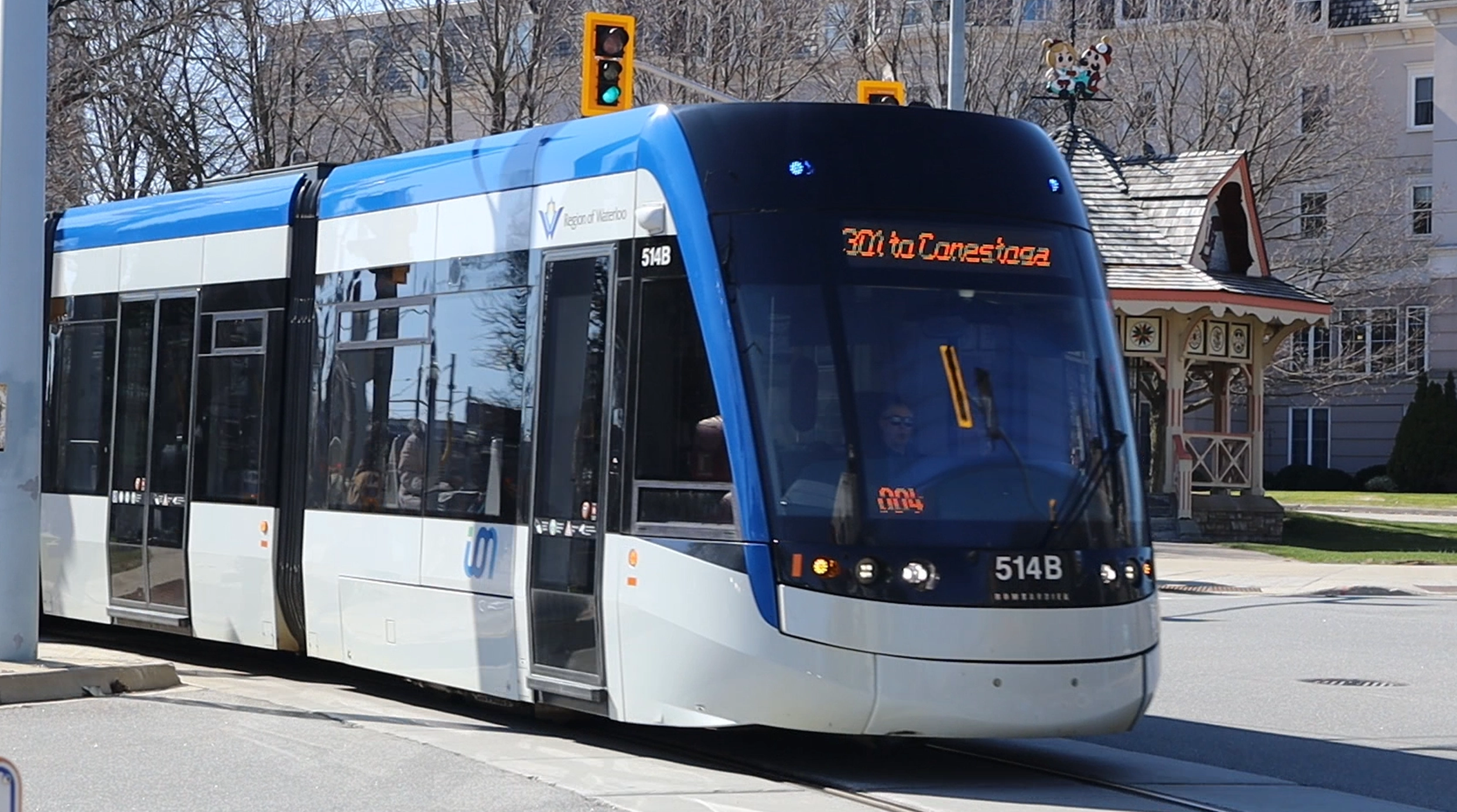
However, despite the launch of ION light rail and its projection to reduce GHG by more than 20,000 tonnes of CO2 by 2031, the region is not on track to meet the 2030 climate action goal.
Hitting the carbon reduction commitments we’ve made will mean deploying more sustainable transportation options that use non-polluting energy, while working to reduce the distances people need to travel by personal vehicle.
Fortunately, our local governments can play a big role in steering us toward success. With the Municipal Election coming up on Monday, October 26, VisionWR is helping voters to understand the challenge, what our local governments can do to help solve it, and which candidates have climate action and sustainable transportation on their agenda for the region.
Ask Your Candidates
Would you commit to actively working with ClimateActionWR and other community groups to achieve our emissions reduction commitments?
What Can Local Governments in Waterloo Region Do?
There are many options available to our municipal governments to improve sustainable transit, reduce congestion and emissions, and position Waterloo Region as a leader in combatting climate change, all while making our communities more accessible and liveable.
Invest More in Reliable Public Transit
According to a survey by Schneider Electric, 83% of Canadians agree that switching to electric public transit is key to making our communities more sustainable. In Waterloo Region, we’re fortunate to have a head start thanks to the ION light rail system that launched in 2019. However, there’s still room for improvement.
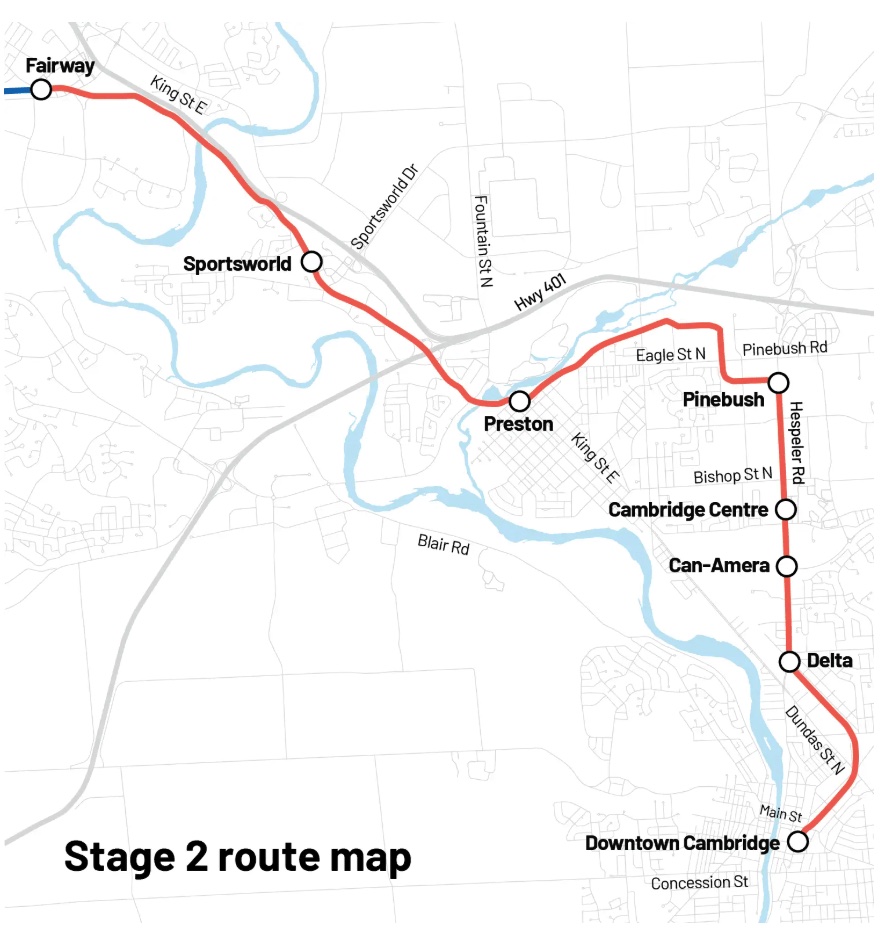
The good news is that the Region of Waterloo already gave the go-ahead for ION Stage 2 in November 2025, which promises to deliver an additional 17 km of tracks from Fairview Mall to Downtown Cambridge (Galt), with seven new stations on the route. But funding for this expansion still needs to be secured! Our region needs strong advocates for public transit who will work with other levels of government to see this project through to completion.
As part of its efforts to mitigate the effects of climate change, the Region has also committed to switch to clean energy sources in public transit vehicles. Grand River Transit (GRT) is already piloting electric buses as part of this effort, with an eye on eventually decarbonizing the fleet.
Speaking of GRT, their current Business Plan includes various improvements to better connect our rapidly-growing region. This includes a Township Transit Strategy designed to give rural residents expanded service and better access to essential services and job opportunities, while also helping to reduce the number of cars on the road.
One of the challenges is balancing expanded service with affordability of transit fares. Here too, we need champions for affordable and accessible transit who are prepared to keep our region’s transit needs on the radar for provincial and federal governments.
Ask Your Candidates
Expanding the next phase of the ION light rail system, improving public transit, and providing more frequent rail service to and from the Greater Toronto and Hamilton Area (GTHA) will reduce the number of cars on roads. Do you support the expansion of public transit systems including the ION and intercity transportation? How should we pay for these expansions in service?
Improve Active Transportation Routes
When we hear the word “transportation,” we might immediately just think of cars, buses, and trucks. However, many residents in our region use “active transportation,” such as cycling and walking, to get where they need to go.
Examples of recent GRT active transportation projects across Cambridge, Kitchener, and Waterloo include the addition of new shared-use trails, sidewalks, street lighting, and bike parking. Improvements such as these benefit:
- Individuals: Physical activity improves overall health, reduces stress, and supports positive mental health.
- Communities: More walking, cycling, and rolling routes increase social interaction between residents in their neighbourhoods and along the trails.
- Environment: Walking and using zero-emission transportation reduces air and noise pollution and emissions, and decreases traffic congestion by getting cars off the road.
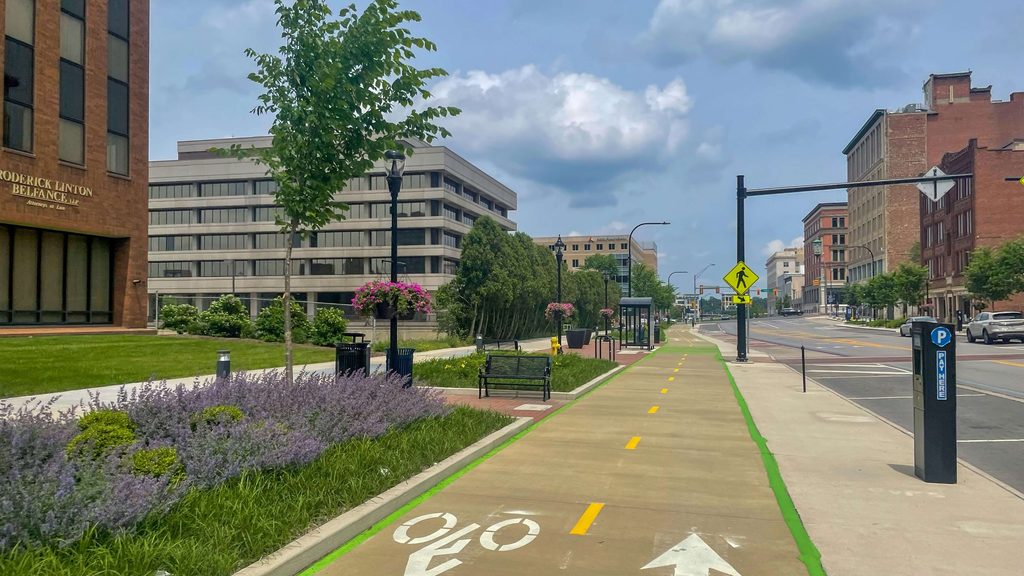
Increasing active transportation routes and shifting to non-polluting energy reduces the distances people need to travel by personal vehicle, and will help our community meet our 80by50 emissions reduction target.
As well, safe and accessible pathways that are wide enough for bicycles, wheelchairs, strollers, and other mobility devices, and are separated from vehicle traffic, make active transportation safer and easier for people of all ages and abilities. Active transportation, like public transit, only works if everyone can use it.
While our region has made important advances in active transportation infrastructure, the system of routes remains fragmented; where there are gaps, pedestrians and cyclists are put in danger as they navigate spaces designed primarily for motorized vehicles.
Ask Your Candidates
What would you do to increase safe and accessible active transportation?
Embrace Complete Communities
A complete community, whether urban or rural, is one in which residents can choose to live, work, and access their basic daily needs locally, without needing a car to get around.
Sometimes referred to as the “15-minute city,” the concept of a community designed for walkable access to schools, shops, businesses, parks, and healthcare has many benefits for both individuals and the environment. Combined with accessible and safe trails, pathways, and public transit, complete communities help reduce congestion and pollution by reducing the need for individual car trips for everyday activities like commuting to work and school or going to the grocery store.
Walkable communities also encourage stronger neighbourhood connections and greater use of shared public spaces and community resources.
Our region already has examples of complete communities clustered around former townsites, like Galt, Preston, or Belmont Village. While these communities have grown organically over time, they are also the result of planning decisions to preserve their character. New developments across our region, whether infill or on previously undeveloped lands, can promote the growth of other complete communities by requiring developers to build for a mix of uses, incorporate public spaces, and create corridors for active transportation.
Ask Your Candidates
How would you support the development of complete communities?
Support Low-Emission Vehicles
Low-emission vehicles, such as electric cars, are an important part of the overall strategy to reduce greenhouse gas emissions while improving air quality and public health.
As mentioned above, GRT is piloting electric buses as part of a larger shift to cleaner energy. This is just one of many efforts to switch to low-emission vehicles already underway across the region. As reported by TransformWR, other examples include:
- Region of Waterloo: As part of the Region’s 2025 Corporate Climate Action Plan, they’ve committed to procure only low-carbon fleet and transit vehicles by 2050 – this includes GRT buses, but also snowplows, ambulances, and police vehicles.
- City of Cambridge: As approved by council in September 2025, Cambridge will procure electric vehicles and equipment as standard practice moving forward.
- City of Kitchener: As of 2024, 70% of the City’s passenger car fleet has been switched to electric, leading to a 75% reduction in maintenance and fuel costs.
- City of Waterloo: $250,000 has been budgeted over 10 years for electric vehicles and charging stations; the current fleet includes 14 electric and 2 hybrid vehicles, and all building standards inspection vehicles have been converted to electric.
- Township of Woolwich: Has committed to 50% electric light-duty vehicles by 2030, and 100% by 2050.
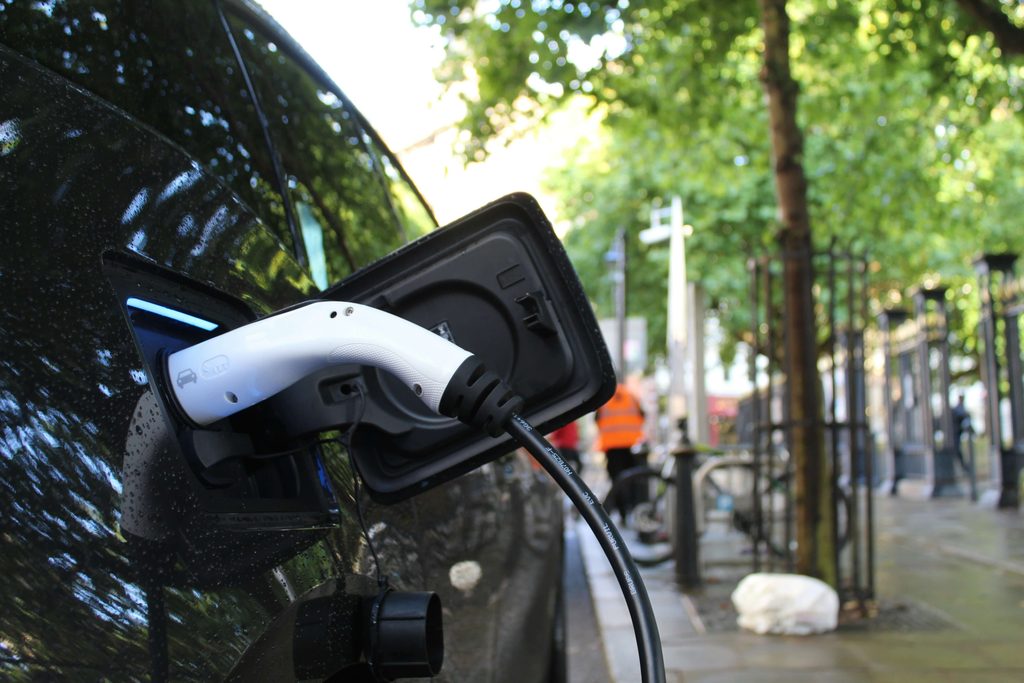
As well as transitioning municipal vehicles to low-emission options, the electric vehicle (EV) charging infrastructure across the region should be expanded to accommodate increased adoption by residents.
Area municipalities, in partnership with the Region, are currently studying an option to require all new residential parking spaces, and a portion of new non-residential parking spaces, to be built as EV-ready (hat-tip again to TransformWR). Plans to provide more EV chargers in public and commercial spaces are also in the works. There is important momentum here, but a full transition to electric vehicles will need even more action by all levels of government.
Ask Your Candidates
What are your priorities when it comes to supporting the transition to an all-electric vehicle infrastructure for our region? Would you actively seek funding such as Green Municipal Fund opportunities to transition municipal fleets to electric vehicles? Would you propose and support parking, zoning and development by-laws that support the transition to better public and private charging infrastructure and EV readiness?
Sustainable Transportation is Good For Our Health
In tandem with its benefits for the climate, sustainable transportation is also a boon for our overall physical health.
Less Air Pollution = Less Respiratory Illness
Investing in reliable public transit, active transportation, complete communities, and low-emission vehicles means there will be fewer fossil fuel-powered cars on the road.
This means fewer pollutants such as fine particulate matter and carbon dioxide emissions in the air, which in turn have significant benefits for respiratory health. The Canadian Health Association for Sustainability & Equity states that “traffic-related air pollution is responsible for approximately 700 premature deaths and $4.6 billion in health-related costs each year” in the GTHA alone.
A Healthier Lifestyle for All
Improving access to transit and expanding accessible pathways, bike lanes, and trails also encourages people to be more physically active, which has innumerable benefits for individuals and society as a whole.
For example, the World Health Organization says that those who are not regularly physically active carry a 20-30% greater risk of death than those who are. The report linked to above also reveals that regular physical activity is “proven to help prevent and manage non-communicable diseases such as heart disease, stroke, diabetes and several cancers. It also helps prevent hypertension, maintain healthy body weight and can improve mental health, quality of life and well-being.”
Safer Roads, Quieter Streets
In addition to the physical health benefits mentioned above (and the subsequent reduced strain on our healthcare system), sustainable transportation also leads to:
- Fewer collisions: Having less cars obviously means less chance of traffic accidents and injuries, but this can also be achieved by designing streets to accommodate all users and not just vehicles, lowering speeds or installing traffic calming measures, and improving intersections for pedestrians and cyclists.
- Lower volume: This refers not just to the lower volume of cars on the road, but to literally quieter streets thanks to the ensuing reduction in noise pollution. Chronic exposure to noise pollution has contributed to an estimated 66,000 premature deaths in Europe, while studies have linked traffic noise with cardiovascular diseases, metabolic disorders, and hearing loss, as well as behavioural difficulties and impaired reading ability in children. (Source: The Real Urban Emissions Initiative)
To find out which candidates have sustainable transportation on their election platform, check out candidate responses to the Climate Action WR survey or the Strong Towns survey, both available via links from VisionWR’s for voters page.
Frequently Asked Questions
How much of Waterloo Region’s pollution comes from transportation?
Transportation is the biggest source of greenhouse gas emissions in Waterloo Region. It makes up over 47% of the total, mostly from gas and diesel cars, trucks, and commercial vehicles.
What is the 80by50 climate target?
“80by50” is the goal to cut greenhouse gas emissions by 80% from 2010 levels by 2050. All eight local municipal and regional councils approved it as part of TransformWR. They also agreed to a short-term goal of cutting emissions in half by 2030.
Is Waterloo Region on track to meet its climate goals?
Not yet. The region is not on track to meet its 2030 target. We are not moving fast enough to get people out of their cars and into other forms of transportation, along with measures also needed in other areas, like emissions from homes and buildings.
Who decides how we get around: the Region or my city?
Both play a part. The Region runs Grand River Transit and ION light rail. Cities and townships shape things like local trails, sidewalks, bike routes, and where homes, shops, and jobs get built. Your vote has an impact at both levels.
What is ION Stage 2, and when will it be built?
ION Stage 2 will add 17 km of track from Fairview Mall to Downtown Cambridge, with seven new stations. Regional council approved it in November 2025. It’s now in the design and pre-construction phase, but funding still has to be secured.
What is active transportation?
Active transportation means getting around under your own power, like walking, cycling, or rolling in a wheelchair. Trails, sidewalks, street lighting, and bike parking all help. Pathways that are separated from traffic make it safer for people of all ages and abilities.
What is a complete community?
It’s a neighbourhood where you can meet your daily needs without a car. Think schools, groceries, parks, healthcare, and work within a short walk, roll, or transit ride. It’s sometimes called a “15-minute city,” and it’s applicable to rural areas as well.
How are local governments switching to electric vehicles?
Many are already doing it. Kitchener has switched 70% of its passenger car fleet to electric. Waterloo, Cambridge, and Woolwich have their own targets, and the Region has committed to low-carbon fleet and transit vehicles by 2050. Municipalities are also studying EV-ready parking requirements for new builds.
How does sustainable transportation improve my health?
Fewer fossil fuel vehicles means cleaner air and less noise, which supports better lung and heart health. More walking and cycling also lowers the risk of serious illness and helps mental health. Safer street design can also mean fewer collisions.
When is the 2026 municipal election in Waterloo Region?
The election is on Monday, October 26, 2026. Voters will choose their local councillors and mayors, along with regional representatives. Visit VisionWR to find out more!
Leave a Reply