

Written by Neil McDonald
Click to navigate directly to each section.
- Introduction
- The New Pressure: The U.S. Trade War
- 4 Ways Municipal Government Impacts Our Finances
- What Municipal Governments Can Do To Improve the Cost of Living
- Frequently Asked Questions
Introduction
You feel it every time you check out at the grocery store, open a hydro bill, or receive notice of a rent increase. Prices just seem to keep on climbing, and it’s fair to wonder whether your local governments can do anything about it.
Here’s the honest answer: municipal governments can’t control interest rates, food prices, or global trade policy. However, they can control some of the levers that shape how expensive it is to live here, and those levers are on your ballot for the Waterloo Region Municipal Elections on Monday, October 26.
Learn more:
Read our Complete Voters Guide to the 2026 Waterloo Region Municipal Elections for all the details on where, when, and how to vote.
The New Pressure: The U.S. Trade War
Before we get to some of the ways your ballot can affect municipal budget priorities and the cost of living in Waterloo Region, we should address the fact that the world’s largest elephant has just entered the room with no intent on leaving soon.
When the U.S. and Canada start slapping duties on each other’s goods, the consequences show up on shelves, bills, and paycheques across both countries. As a result, it’s become a key topic in our upcoming municipal election here in Waterloo Region.
How The Trade War Affects Waterloo Region
The Kitchener-Cambridge-Waterloo (KCW) economy sends about $17.8 billion in goods to the U.S. every year, equal to 46.5% of the region’s GDP, and the Canadian Chamber of Commerce has ranked this region as the fourth-most vulnerable to U.S. tariffs in Canada.
For example, Ontario’s independent Financial Accountability Office projects regional employment landing 1.5% lower in 2026 than it would be without tariffs. In addition, consider that KCW’s top 30 highest-ranking export industries account for some 81,500 jobs, some of which are now at risk.
Severe disruption in trade and employment will have serious consequences for this region. The more people that are out of work, the more need there’ll be for financial assistance, housing supports, and other social aid that comes out of municipal funds.
This isn’t just a local worry. The Federation of Canadian Municipalities, which represents local governments across the country, has been telling its members to brace for a “long winter” of economic uncertainty. They also warn that the price pressures Canadians were already facing on groceries and housing could deepen without more support from senior governments.

The City of Kitchener has responded by relaunching its Tariff and Trade Task Force, connecting local manufacturers with Canadian suppliers and helping them diversify their customer base.
The Region of Waterloo took similar action when new U.S. tariffs took hold in 2025, unanimously passing a motion directing staff to prioritize Canadian and locally-made products in its own purchasing decisions. Cambridge Mayor Jan Liggett recently signaled her support for provincial and federal measures to protect Canadian businesses from tariff fallout as well, including creating a program for delayed property taxes without penalty or interest to help local firms free up cashflow.
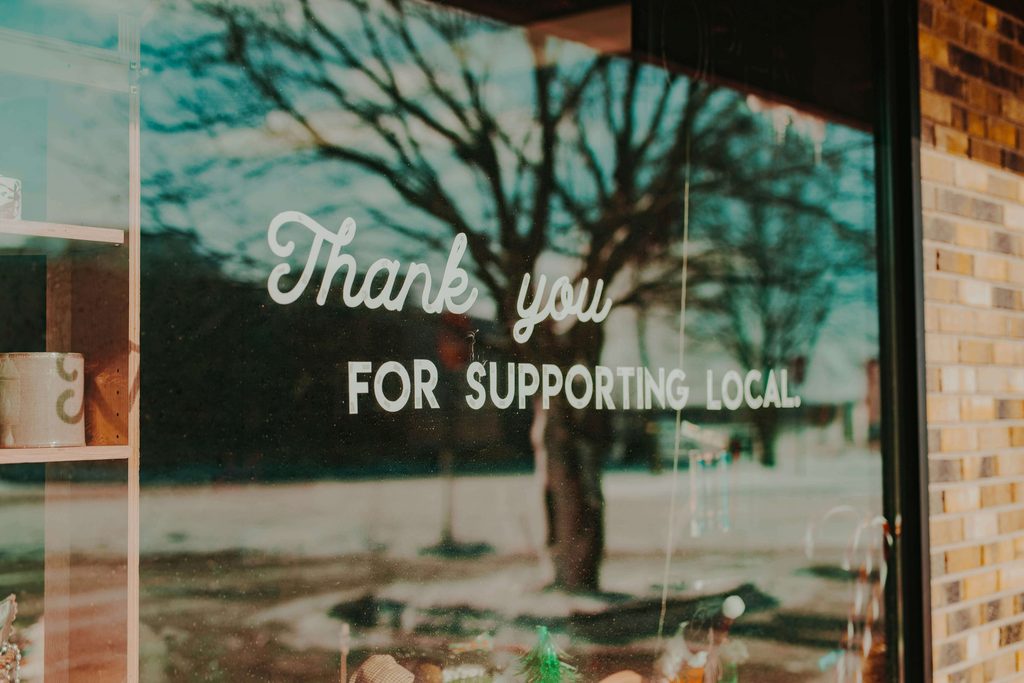
In light of the latest tariffs, demand for local and Canadian products is already surging, and websites like The Canada List and Made in CA, as well as apps like O SCANada, can help consumers support local brands at the checkout counter.
When casting your ballot this October, make sure you know which candidates support Buy Local policies and have a plan to counteract the economic whims of our southern neighbours.
Ask Your Candidates
Do you support Municipal policies that favour local procurement, for example, policies that require the municipality to hire/buy local or Municipal policies that require local procurement in major contracts municipalities engage in with developers and other corporations?
4 Ways Municipal Government Impacts Our Finances
Beyond launching a “buy local” campaign to combat the fallout from tariffs, let’s take a look at some other ways that municipal governments can affect your household’s bottom line. Here’s a few items to consider before Election Day on October 26.
- Property taxes. Your local city or township council is responsible for setting commercial and residential property tax rates.
- Commercial: When local employers shrink or lay off workers, commercial property values can soften over time. Cambridge Mayor Jan Liggett has already pointed to this directly, noting the city was “seeing the repercussions of the economy on our industrial municipal tax base” and directing staff to look at deferring fees for businesses hit hardest.
- Residential: The strain isn’t limited to businesses. Waterloo Region property owners now owe more than $150 million in unpaid property tax arrears, a sign of just how many households are already stretched thin before a single new tariff-driven job loss hits. When a commercial tax base softens at the same time residents are falling behind on their own bills, municipalities are squeezed from both directions at once, with less revenue coming in and rising pressure to keep tax increases modest for households already struggling.
- Water and utility rates. Rate structures, infrastructure investment, and how the Region plans for future capacity all shape what shows up on your water bill. Read our water infrastructure post for a deeper dive on this fluid topic.
- Transit fares and service levels. How much you pay to ride, accessibility, and service times/frequency are just a few of the public transit issues decided at the regional level.
- Local purchasing and business support. Besides “Buy Canadian, buy local” procurement, municipalities can also require living wages on city contracts and prioritize local businesses for municipal spending. Keeping public dollars circulating locally is one of the more direct ways a municipality can strengthen the local economy that your job and your neighbourhood businesses depend on.
What Municipal Governments Can Do To Improve the Cost of Living
In this election, you can’t vote on tariffs, interest rates, or global grocery prices.
But you are voting on who manages the consequences locally: which candidates understand supply chains and local business needs, who’s serious about procurement policy that keeps money circulating here, and who’s paying attention to how growth decisions today shape your tax bill for decades to come.
You’re also voting on which candidates will support other issues that affect the region’s, and your, financial wellbeing, such as:
Inclusive and equitable tax spending and planning
When you vote this October, you’re choosing representatives who’ll decide how tax dollars get spent, and who those dollars actually reach. This means you get to choose who’ll support strong public services and fair pay policies that help everyone access basic needs like food, health care, and housing.
Or who’ll push for zoning that puts affordable housing near transit lines, or invest in low-fare transit and safer bike routes that make getting around less expensive.
Growth and long-term financial health
When a city or region expands outward with new subdivisions on farmland, the fees developers pay only cover the upfront cost of new roads, water lines, and sewers. They don’t cover decades of maintenance after that, and neither do the property taxes collected from the homes that move in.
Municipalities end up carrying that gap as long-term infrastructure debt, whether that shows up as roads that don’t get fixed, bills that quietly climb, or water infrastructure that doesn’t get maintained. Recent tax increases in Waterloo Region, for example, are partly due to the need to pay for past low-density development and its ongoing upkeep.
Candidates who favour building up instead of out, filling in existing neighbourhoods rather than developing the edges of town, are choosing a path that leaves more money for libraries, parks, and recreation centres. That’s the trade-off on the ballot: sprawl now (and its perennial drain on public funds), or a more financially sustainable community later.
Ask Your Candidates
Urban sprawl does not pay for itself, and weakens the financial sustainability of municipalities, leaving less money for other things we want in our communities. What approaches would you use to address this issue?
Frequently Asked Questions
Why does municipal government affect my cost of living if it doesn’t control jobs or tariffs?
Municipal and regional governments set property taxes, water rates, and transit fares directly, and those bills are shaped by how well the local economy and local infrastructure planning are holding up.
How do U.S. tariffs affect Waterloo Region’s economy?
The region sends a large share of its economic output to the United States, particularly in manufacturing and auto-related industries, which makes it more exposed to tariffs than many other parts of Ontario.
Does urban sprawl actually make my property taxes higher?
Over time, yes. Low-density growth on the edges of a city generates infrastructure costs that ongoing tax revenue often doesn’t fully cover, leaving municipalities to carry that gap as long-term debt.
What is Kitchener’s Tariff and Trade Task Force?
It’s a city-led group that helps local businesses find Canadian suppliers, diversify their customers, and access support programs in response to U.S. tariffs.
Where can I find out where municipal candidates stand on affordability?
Attend an all-candidates meeting, check candidate websites, and ask directly about their positions on procurement policy, local economic support, and growth planning. Check out our complete voter’s guide for everything you need to know before Election Day.
Leave a Reply