
VisionWR · June 2 workshop
How to Host an All Candidates Meeting
A playbook for success
All Candidates Meetings are a fantastic way for voters to get to know those running for local governance and hear from them about issues that matter most to the communities they seek to represent. The more voters are engaged, the more likely they are to vote.
On June 2, VisionWR co-facilitated a workshop for community groups and neighbourhood associations interested in hosting all candidates meetings for the October 2026 Municipal Elections.
Alongside the workshop recap and resources below, VisionWR aims to help groups connect with the technical and volunteer support needed to deliver a successful meeting. We are also interested in helping to record and/or share meeting videos and transcripts so voters can watch them at any time. Reach out to us about this at [email protected]!
Presenters at the June 2 workshop
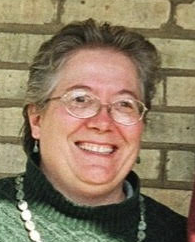
Shirley Gosselin
Board member and past President of the Cherry Park Neighbourhood Association (14 years)
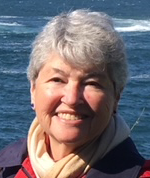
Peggy Nickels
President of the Victoria Park Neighbourhood Association
Co-chair, Kitchener Citizens for Liveable Development
Workshop introduction
Introduction to Municipal Government
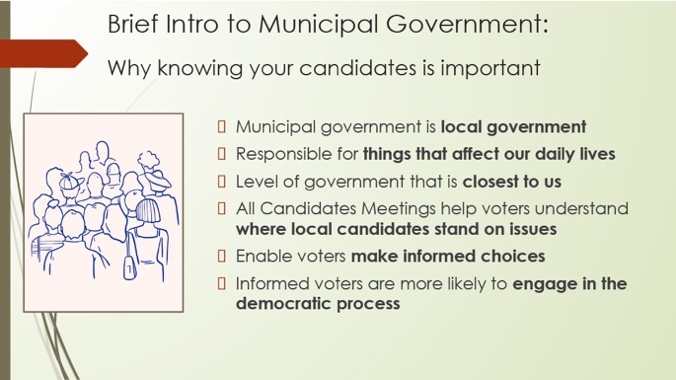
3 min 40 sec
Please also see the additional resources about the roles of local leaders in the For Voters section of this site.
The workshop
The playbook
Step 1
Form a work group and a work plan
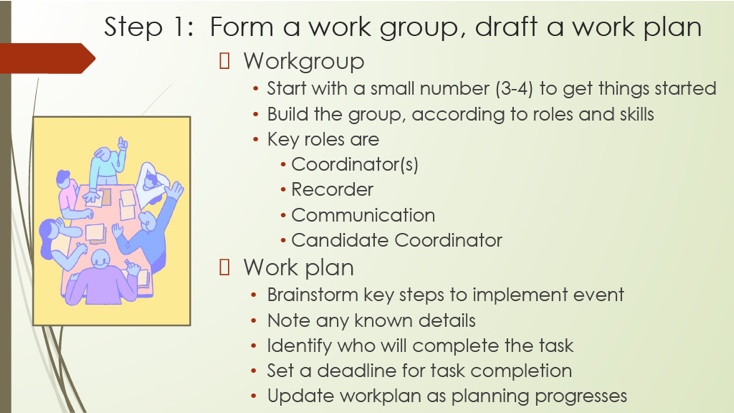
4 min
Resource: Workplan
Step 2
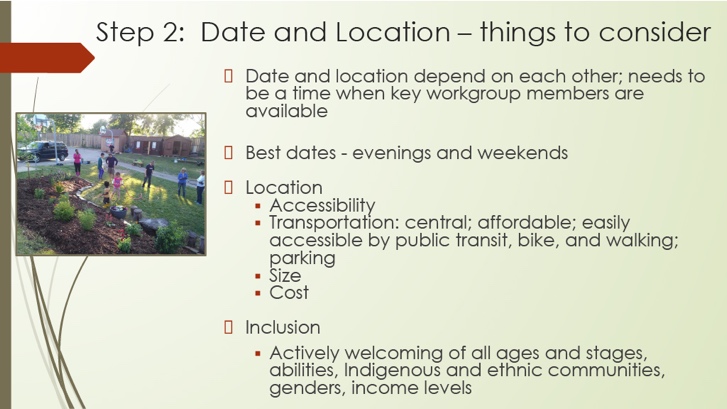
Date and location — things to consider
6 min 40 sec
Additional tips
- A Community Centre may waive the room fee when you complete its declaration for sponsoring an all candidates meeting.
- Some venues already have sound equipment.
- An evening event may exclude parents with young children; consider child care or a weekend event.
- Plan for the accessibility and language needs of your community, including signing or interpretation.
- Coordinate across neighbourhood associations to join forces within a ward and avoid scheduling conflicts.
- Attendance can range from roughly 50 to 200 people, depending on the race and community.
Step 3
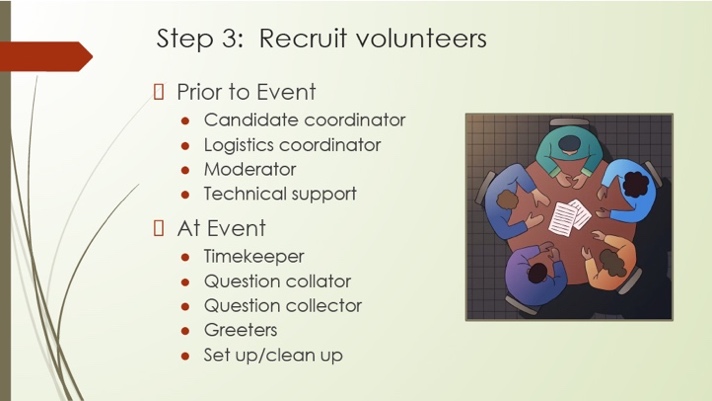
Recruit volunteers
5 min 35 sec
Summary of volunteer roles
Candidate coordinator: tracks the candidate list, sends invitations, follows up, collects community questions, and sends the meeting details and prepared questions.
Logistics coordinator: organizes materials and equipment, arranges technical support and refreshments, and recruits a timekeeper.
Moderator: welcomes attendees, explains the facility and meeting format, and introduces the candidates.
Technical support: tests, sets up, and operates the equipment.
Question collector and collator: gather written audience questions, remove duplicates, and turn similar submissions into concise questions.
Greeters: welcome people, direct them to the room and sign-in, and help with setup and cleanup.
Step 4
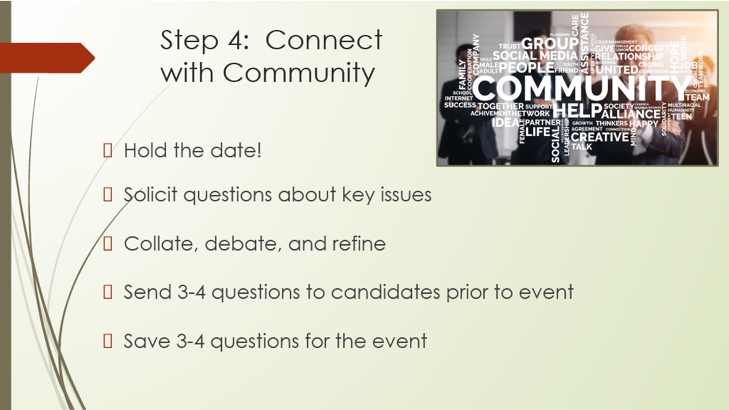
Connect with the community
 Watch Step 4 on YouTube
4 min 15 sec
Questions sent to candidates in 2022
- The pandemic has exasperated the strains we have been building on our health care system for many years. Health care is delivered by federal, provincial and municipal governments. How will you work to improve areas of health care within the region’s jurisdiction like paramedic services, hospital facilities, retention of health care professionals, home care, public health, and so forth.
- Waterloo Region just approved a new regional official plan. One of the central pillars is the county’s countryside line, intended to protect our farmland, natural areas and rural communities from urban sprawl. Will you commit to ensuring a successful implementation of the countryside line as a permanent boundary for future urban growth, even if it means defending against challenges by land speculators?
- Name specific actions you would take to achieve transformWR commitments.
- Are you accepting campaign donations from developers? Please give concrete examples in your answers.
Additional tips
- Recommend 2 min. per answer from candidates, unless you have a lot of candidates (e.g. Regional councillors) in which case you may need to allow 1 min per answer.
- Also pay attention to the media when collection issues for questions – newspapers and radio will bring up key current local issues.
Step 5
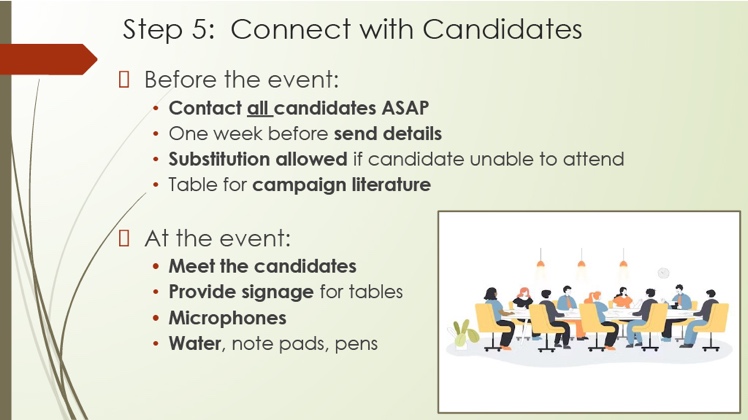
Connect with the candidates
6 min 2 sec
Sample emails to candidates
Initial invitation
Hello, Kitchener candidates for Waterloo Regional Council, the Cherry Park Neighbourhood Association, the Victoria Park Neighbourhood Association, will be hosting an all candidates meeting for the Kitchener candidates for Waterloo Regional positions on Sunday, September 20th, from 2 to 4 in Victoria Hills Community Center, 10 Chickpea Drive, Kitchener. We are hoping you’ll be able to attend.
Each candidate will have space for the campaign materials and time before and after the meeting to meet and greet with the public. Prepared questions will be distributed to the candidates the week before the meeting, and new questions from the people will also be shared at the meeting.
I would appreciate hearing back from you,
Email reminder with details one week before
Hello, Kitchener candidates for [Waterloo Regional Council] positions,
Our all candidate meeting on [date of meeting] is quickly approaching. I wanted to get back to you with instructions and how the afternoon will proceed, and to give you the first four questions you’ll be expected to answer (see below).
Our format for the evening will be:
- A welcome by our emcee for the to the People and an explanation how the meeting will work.
- Introductory remarks by each candidate one minute each.
- Prepared questions, one minute per question.
- Questions from the floor [one] minute each, time permiting only.
- Concluding remarks one minute each.
- Mingling time 30 minutes afterwards.
The four advance questions from the community are as follows:
- [insert questions]
If you are unable to attend, we invite you to send a representative to share your prepared answers to the questions above.
Note that they will not be able to participate in the subsequent questions from the floor.
We will rotate the order in which each candidate speaks. To be fair to everyone, all the questions from the floor will be submitted to our questions moderator in written form and condensed and presented to the candidates by our emcee. There will only be questions from the floor if time permits.
Thank you and we look forward to seeing you on the [date of meeting]
NOTE: If they are unable to attend the event, you can allow them to have a substitute come and read their prepared answers and hand out their campaign materials, but not answer the questions from the floor.
Additional tips
- Use large, readable name signs so attendees and video viewers can identify each candidate.
- Provide enough microphones to minimize sharing.
- Have water, notepads, and pens available.
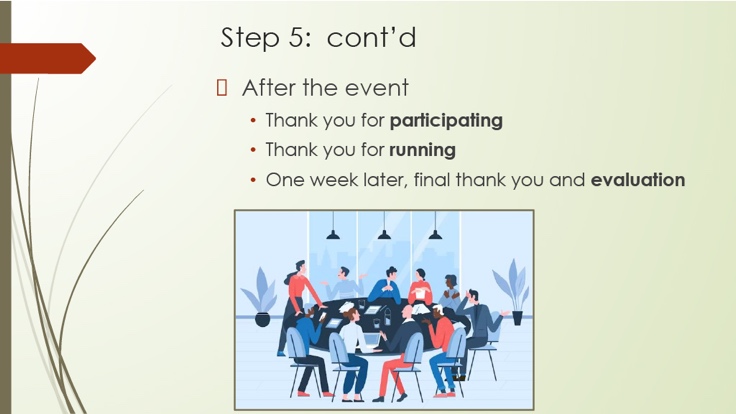
- Thank candidates for participating and send a final thank-you and evaluation after the event.
Resource: Candidate lists by municipality, Region, and school board
Step 6
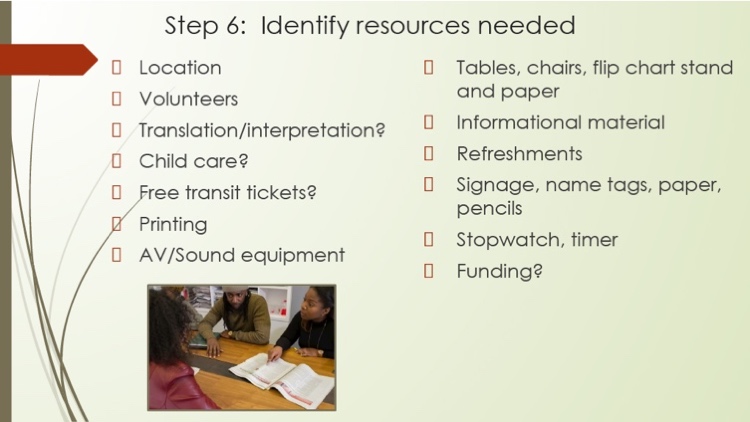
Identify the resources you need
3 min 44 sec
Potential budget items
Designate a treasurer to account for budget requirements.
- Venue: the fee may be waived for a sponsored all candidates meeting; election officials may help validate the declaration if needed.
- Equipment: microphones and recording equipment may be available from the venue or through VisionWR.
- Refreshments: ask whether a local organization can donate them and be recognized at the event.
- Printing: seek an in-kind donation through a neighbourhood association or community network.
- Donations: consider whether passing a hat at the event can defray remaining expenses.
Step 7
Promote the meeting
4 min 14 sec
Additional tips
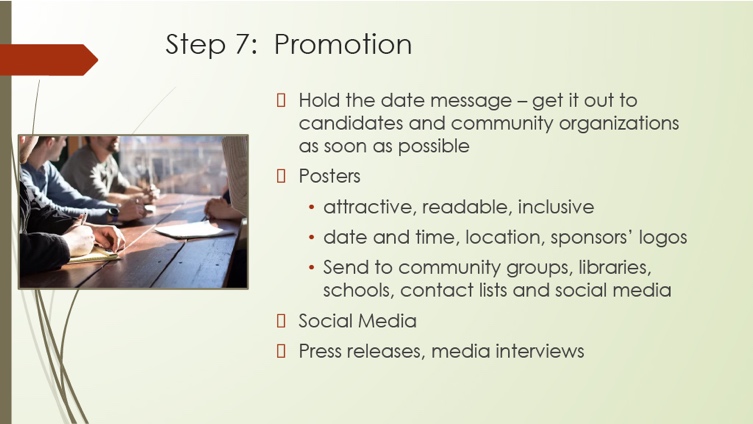
- Send a hold-the-date message to candidates and community organizations as early as possible.
- Make posters readable, inclusive, and complete with date, time, location, and sponsor recognition.
- Share through neighbourhood associations, community centres, libraries, schools, personal networks, social media, and public event listings.
- Look for a communications volunteer who can write press releases and speak with local radio and newspaper contacts.
Step 8
Develop the meeting format

2 min 13 sec
Resource: Canadian Unitarian Council, guide to hosting an all-candidates meeting
Step 9
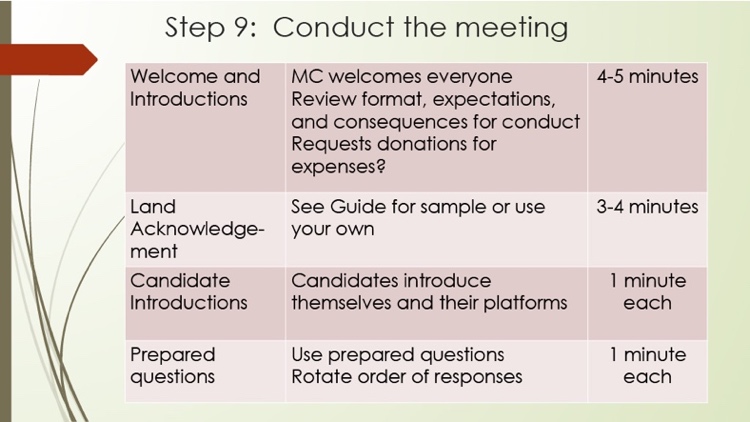
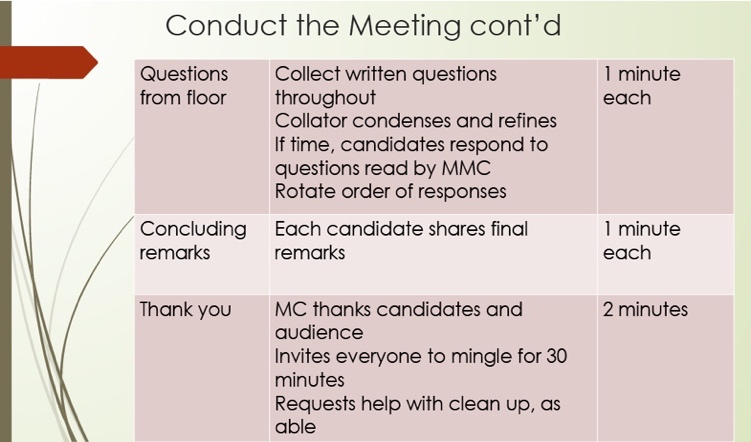
Conduct the meeting
6 min 57 sec
Additional tips and meeting roles
- Rotate response order; going first or last can both be disadvantages.
- Track overtime and subtract it from a later answer or closing comment so every candidate receives equal time.
- Use a bell or another clear time signal.
- Collect questions in writing and have a quick, concise collator remove duplication.
- Give attendees a scorecard for notes.
- Provide tables where candidates can share campaign materials and meet attendees afterwards.
Emcee: choose someone with a strong voice who is comfortable, welcoming, and efficient. Introduce candidates in alphabetical ballot order.
Question collator: choose someone who is quick on their feet and a strong written communicator.
Candidate Scorecard – Coming soon…
Step 10
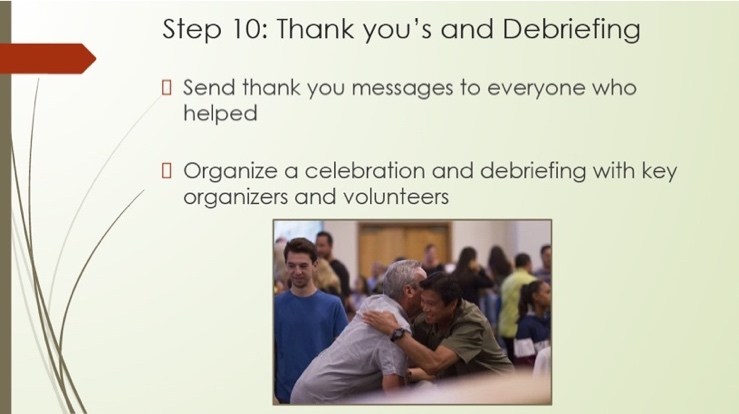
Thank-yous and debriefing
1 min 46 sec
From the workshop floor
Questions and answers
Select a question to read the answer shared during the workshop. Answers have been lightly edited for clarity.
Should one meeting include every municipal race?
A meeting with roughly 20 candidates can severely limit speaking time and make it difficult for attendees to remember which office each person is seeking. The presenters strongly recommended dividing the races and doing one meeting well. Ward candidates often have fewer public forums than mayoral candidates, while a Regional Council meeting may require fewer prepared questions because of the larger slate.
When can meetings be held, and when does candidate registration close?
The workshop identified August 21, 2026 as the candidate registration deadline. Municipal election websites will list registered candidates and the offices they are seeking.
What may a substitute do when a candidate cannot attend?
A substitute may read a prepared statement supplied by the candidate. The workshop presenters did not allow substitutes to participate in the prepared or audience questions on the candidate’s behalf.
How can organizers collect and prepare community questions?
Invite questions through neighbourhood email lists and community networks, then have a small group identify the most important themes. Send the selected prepared questions to candidates about a week in advance and retain a few strong questions to begin the audience portion.
How often should organizers check the candidate list, and how can they find contact information?
Check the official list regularly and maintain a separate working list. Official listings may not include complete contact information, so organizers may also need to use candidate websites, campaign social accounts, public directories, and community networks to reach everyone.
How should questions from the audience be managed?
Avoid an open microphone. Give attendees index cards or paper and pencils, collect the written questions in a basket, and have a skilled question collator combine duplicates and turn submissions into concise, readable questions.
How do organizers decide between ward, Regional, and school-board meetings?
The presenters organized meetings for their ward, Regional Council, and the school boards. Ward boundaries and neighbourhood partnerships can help determine the practical audience. They also emphasized school-board races because voters often have less information about trustee candidates.
What should happen when an invited candidate does not attend?
The presenters kept a named place for every candidate so attendees could see who was running and know that all candidates had been invited. They did not label a candidate as having declined or refused; the neutral fact communicated was that the invitation had been sent.
Are school-board trustees elected by ward or city?
The workshop answer was that trustees are elected across the city and voters select the public or Catholic board associated with their school support. Organizers noted that trustee races often receive less attention even though school boards are an important part of local public life.
Is the candidate coordinator the single contact, and where can candidate information be found?
Yes. The candidate coordinator is the single point of contact. Start with the relevant municipal election website; it will list registered candidates, although contact details may vary. Waterloo Region Votes may also publish candidate information after the registration deadline.
Can a meeting show information about candidates who are not present?
Yes. A slide can list other candidates and the meeting can briefly explain what the relevant level of government does, what it is responsible for, and how many candidates a voter may select.
What should organizers consider when live-streaming for people who cannot attend?
Live streaming depends on reliable technical support, suitable cameras and microphones, and a strong internet connection. OBS can send a stream to services such as YouTube or Zoom. Some places of worship already have installed streaming equipment. When the connection is unreliable, recording locally and uploading afterwards may be safer.
Do candidates need to sign a recording waiver?
The workshop answer was that it depends on the venue and the circumstances. Some public and community-event venues address recording in their standard terms. Organizers should confirm the venue’s requirements and clearly notify participants about recording.
How can a meeting support people who need language interpretation?
Ask Community Centres and other prospective venues whether they offer interpretation services. Recorded meetings can also be translated or captioned afterwards.
Additional tips from Waterloo Region Votes
- Post event information at a public URL that does not require a login. A regular website or public event page is easier to link to than a restricted social post.
- Recordings help the much larger group that cannot attend in person. During recorded Q&A, ask the moderator to say each candidate’s name before every answer so audio-only listeners always know who is speaking.
How VisionWR can help
VisionWR is interested in helping groups connect with technical and volunteer support, and in making meeting recordings available for voters.